Articles & Perspectives
Community Insights

Veterans and Mental Wellness: You Earned Support
Asking for support isn't a weakness, and it isn't giving up. It's one of the most effective things a veteran can do for their own wellness. Here's what that can look like, and where to start.
Coming home doesn't always mean coming back to the same life you left. Some veterans carry things that are hard to name and harder to explain to people who weren't there. That weight is real, and it's more common than a lot of veterans realize.
The Numbers Tell Part of the Story
According to the VA's most recent National Veteran Suicide Prevention Annual Report, an average of 17.6 veterans died by suicide each day in 2022. That number is hard to read. But the same report has something else in it, something hopeful: among veterans who were connected to VA mental health care between 2001 and 2022, suicide rates fell significantly for those being treated for PTSD, depression, anxiety, and alcohol use disorder. Getting connected to support doesn't just help. The data shows it works.
Support Doesn't Require a Diagnosis, or VA Enrollment
A lot of veterans stay away from support because they think they need a diagnosis first, or because their relationship with the VA is complicated, or nonexistent. At RHTWG's Veterans Wellness Circle, none of that is required. Any branch of service. Any discharge status, including other than honorable. Enrolled in VA care, never enrolled, or somewhere in between. You don't need paperwork to prove you served, and you don't need a diagnosis to be welcome here.
What Real Support Looks Like
It's not just talk therapy or a hotline call, though those matter too. It's a peer navigator who helps you sort through a VA claim or track down a missing DD-214. It's a women-centered, MST-informed peer circle for veterans who haven't found a space that felt safe before. It's help finding housing when the system feels impossible to navigate alone. It's someone who follows up at 30, 60, and 90 days, not just once.
If You're Struggling Right Now
If things feel urgent today, you can reach the Veterans Crisis Line anytime, free and confidential: dial 988 then press 1, text 838255, or chat at VeteransCrisisLine.net. You don't need to be enrolled in VA care to use it.
For ongoing support, connection, and a plan built around your life, RHTWG's Veterans Wellness Circle is here. Call (844) 983-3500 or schedule a call here. No referral needed. You served. Let us support you.

Stress vs. Burnout: How to Tell the Difference
Stress and burnout can feel similar from the inside, but they are not the same thing. Knowing which one you're dealing with changes what actually helps.
"I'm just stressed" is something a lot of people say right up until the point where they can't get out of bed. Stress and burnout live on the same spectrum, but they are not the same experience, and mixing them up can mean reaching for the wrong kind of help.
What Stress Feels Like
Stress is your body responding to pressure. It shows up when there's too much on your plate: a deadline, a bill due, a hard conversation coming up. Stress tends to have an edge to it, urgency, a sense that if you could just get through this one thing, you'd feel better. It comes and goes with the thing causing it.
What Burnout Feels Like
Burnout is different. It's not one hard week, it's what happens after too many hard weeks in a row with no real recovery in between. Burnout feels flat rather than urgent. You might not feel anxious so much as numb, exhausted, or disconnected from things you used to care about. Rest doesn't seem to touch it the way it used to.
Why the Difference Matters
Stress usually responds to short-term relief: a good night's sleep, finishing the task, a weekend off. Burnout doesn't respond the same way, because the problem isn't one task or one week, it's a pattern that's been building for a while. Treating burnout like ordinary stress (pushing through, waiting for a break) often makes it worse.
What Actually Helps
If you're in burnout territory, the first step is naming it honestly instead of telling yourself to push harder. From there, it helps to look at what's been unsustainable, not just for a week, but for months, and to bring in support rather than trying to recover alone. That can look like a peer support group, a conversation with a community health worker, or simply someone checking in on you regularly.
If any of this sounds familiar, you don't have to figure it out by yourself. Call us at (844) 983-3500 or schedule a call here. No referral needed.

Simple Coping Tools You Can Use Right Now
A short collection of practical, everyday tools designed to support calm, grounding, and emotional regulation when things feel heavy.
You don't need a therapist's office or a special app to access coping tools. Some of the most effective ones are things you can do right now, wherever you are. Here are a few that our community comes back to often.
Box Breathing
When you're anxious or overwhelmed, your breathing shortens. Box breathing interrupts that cycle. Breathe in for 4 counts, hold for 4, breathe out for 4, hold for 4. Repeat three to five times. It sounds simple because it is. Simple works.
The 5-4-3-2-1 Grounding Method
When your mind is racing or you feel disconnected, grounding brings you back to the present. Name 5 things you can see, 4 you can physically feel, 3 you can hear, 2 you can smell, and 1 you can taste. This technique is used by community health workers, peer supporters, and crisis counselors for good reason. It works.
Movement Breaks
Stress lives in the body. Even five minutes of movement changes your chemistry. A short walk, stretching, dancing in your kitchen, shaking out your hands. It doesn't have to look a certain way to be effective.
Write It Down
You don't have to process everything out loud. Sometimes getting thoughts out of your head and onto paper creates enough distance to breathe. You don't need to write perfectly. Write whatever comes out. You can throw it away after if you want.
Reach Out
Coping doesn't mean coping alone. Calling someone, texting someone, sitting with someone who doesn't require anything from you. Connection is one of the most powerful regulators we have. If you don't have someone to call right now, RHTWG is here. (844) 983-3500.
Why Community-Based Wellness Matters
A reflection on why prevention-focused, community-based wellness plays a vital role in resilience, connection, and long-term growth.
Most wellness systems are built to respond after something has already gone wrong. You get a diagnosis, a referral, an appointment three months out. But what about the time before that? The months of stress, isolation, and uncertainty before anyone labels it a crisis?
Community-based wellness operates differently. It starts earlier, stays longer, and doesn't require a diagnosis or an insurance card to access.
Connection Is Not a Luxury
Research consistently shows that isolation is as harmful to health as smoking 15 cigarettes a day. People who feel connected to their communities recover faster, manage stress better, and report higher quality of life. This is not a soft finding. It's biology. Humans are wired for community.
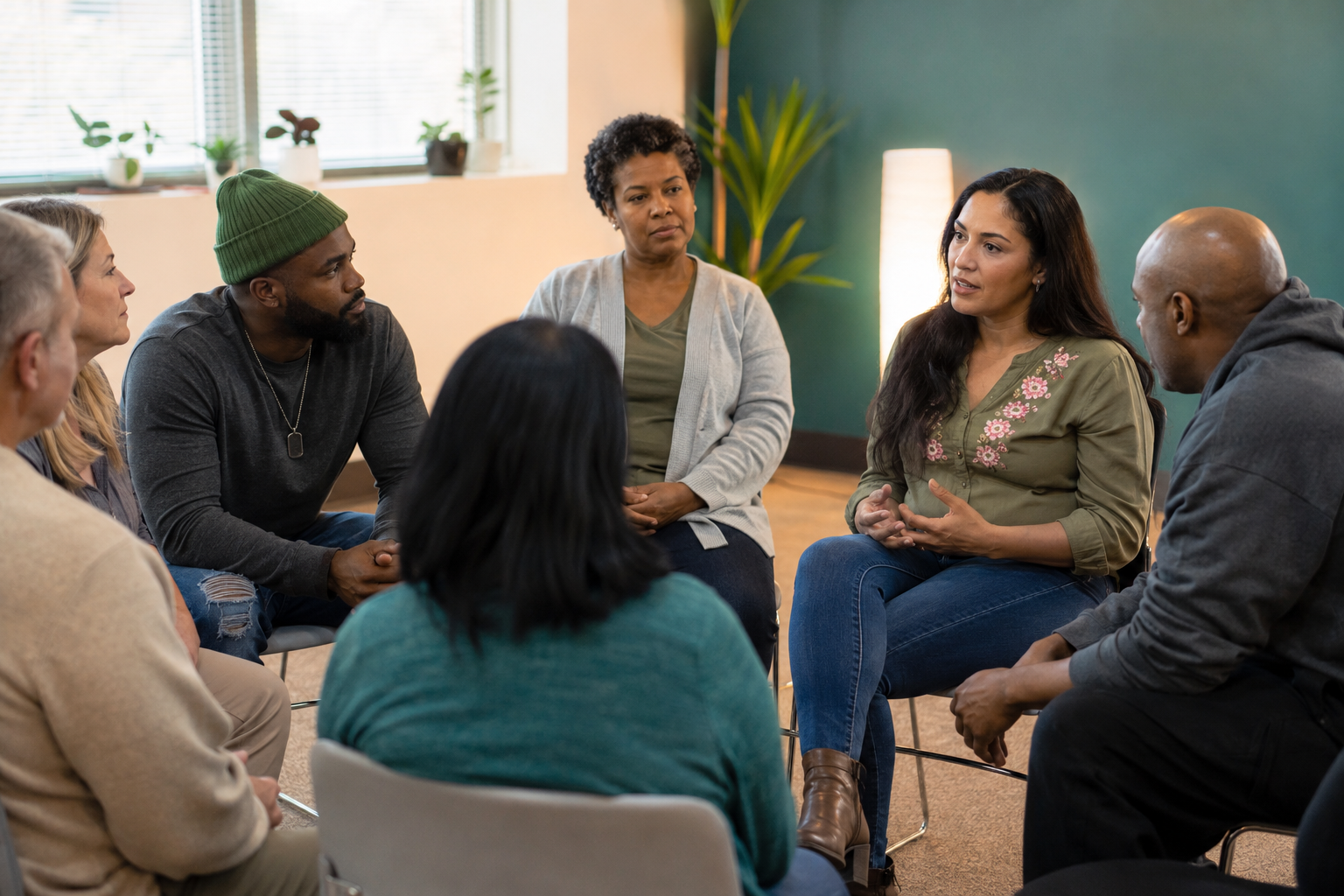
When we sit in a peer circle together, when someone shares a struggle and the room nods in recognition, something shifts. Not because anything was fixed, but because the isolation broke. That break is where healing starts.
Prevention Over Crisis Response
The current system waits for people to fall before it catches them. Community wellness is about building the net before the fall. It's consistent, low-barrier support that strengthens people's capacity to handle hard things before they become crises.
At RHTWG, our programs are built around this idea. We show up before the eviction notice. Before the breakdown. Before someone has nowhere left to turn. And we stay.
It Belongs to Everyone
One of the most important things about community-based wellness is that it doesn't require you to be sick enough or poor enough or in enough crisis to qualify. If you're navigating stress, transition, grief, burnout, or uncertainty, you belong here. No referral needed.
What Peer Support Really Means (and What It Doesn't)
An honest explanation of peer support, its purpose, and how it differs from professional or therapeutic services.
Peer support gets used as a catch-all phrase that can mean different things in different contexts. Here's what it means at RHTWG, and what it doesn't.
What Peer Support Is
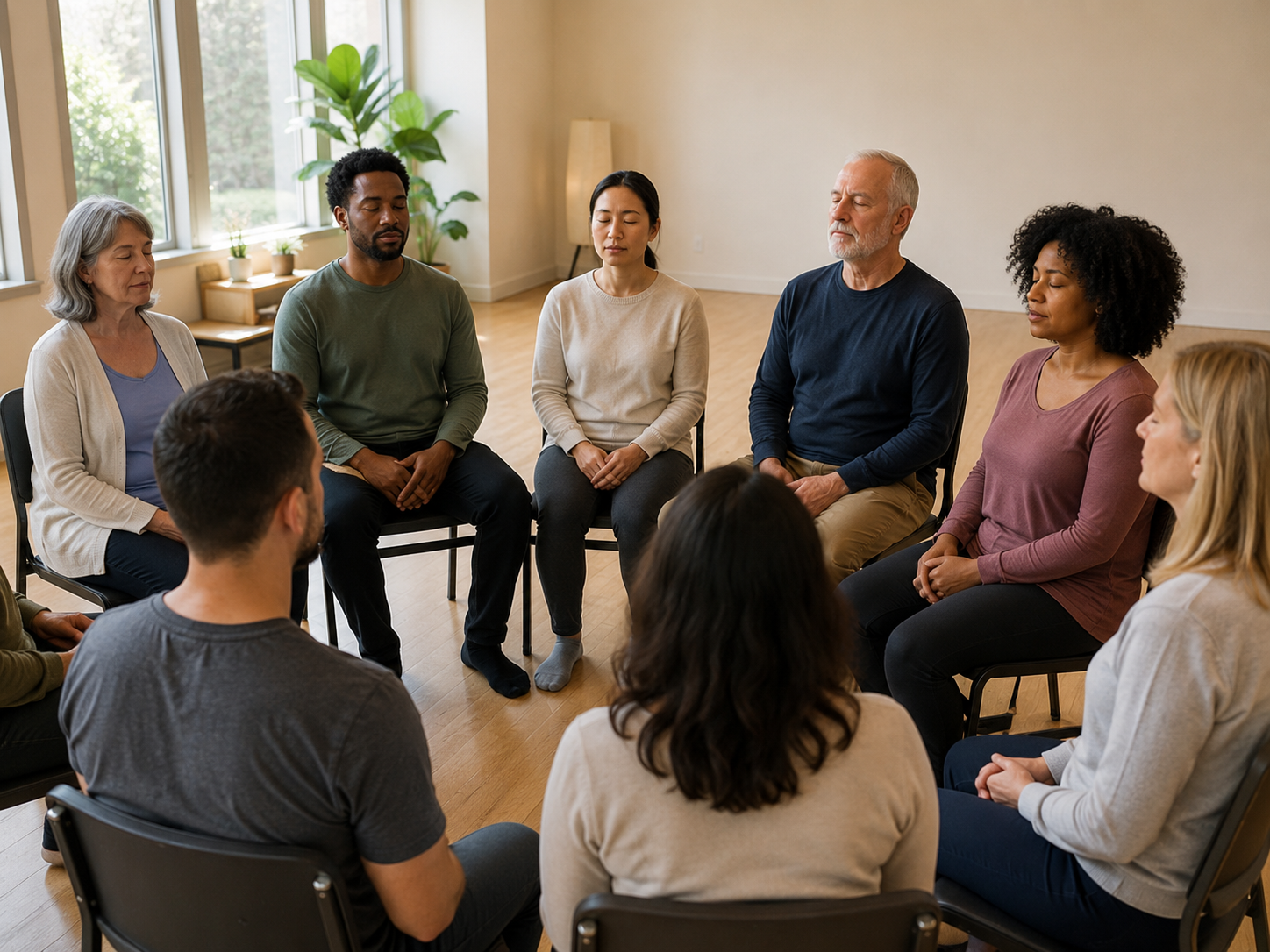
Peer support is mutual aid between people with shared lived experience. It's the difference between someone who has read about grief and someone who has carried it. The person who's been through it brings something no degree or certification can fully replicate: they know what it actually feels like.
In a peer support setting, you're not a client being assessed. You're a person in a room with other people who get it. The peer supporter's role is to listen, to walk alongside, to share what worked for them without telling you what to do, and to help connect you to resources when you need more than a conversation.
What Peer Support Is Not
- It is not therapy or counseling.
- It does not diagnose, treat, or prescribe.
- It does not replace professional mental health services.
- It does not require you to share anything you're not ready to share.
Why It Works
People often open up in peer settings that they wouldn't in a clinical one. The power dynamic is different. The language is different. The judgment is lower. That openness creates conditions for real honesty, and honest conversations are often where change begins.
RHTWG's programs are built on this foundation. Our facilitators bring lived experience to the work. We're not above what we serve. We're in it with you.

Welcome to Rise Heal Thrive. If You're Here, You're Not Alone.
A welcome to Community Insights and an introduction to the values, purpose, and prevention-focused approach of Rise Heal Thrive Wellness Group.
If you found your way here, something brought you. Maybe it was a search for resources. Maybe someone passed along the name. Maybe you're in a hard place and were looking for anything at all. Whatever it was, we're glad you're here.
Who We Are
Rise Heal Thrive Wellness Group is a peer-led nonprofit based in Las Vegas. We were founded by people who know firsthand what it's like to navigate systems that aren't built for you. That shapes everything we do.
We offer peer support circles, community health navigation, document recovery assistance, housing resources, veterans wellness programming, and support for young people aging out of foster care. All of it is low cost or free. None of it requires a referral.
What We Believe
We believe healing happens in community, not in isolation. We believe people deserve support before they're in crisis, not just after. We believe that lived experience is expertise, and that the people closest to the problem are often closest to the solution.
We believe you are capable, worthy, and not as alone as it might feel right now.
How to Get Started
You can call us at (844) 983-3500, text us at (702) 983-8998, or schedule a call on Calendly. No paperwork, no intake form, no prerequisites. Just a conversation to understand what you need and connect you with the right support.
We're glad you're here.